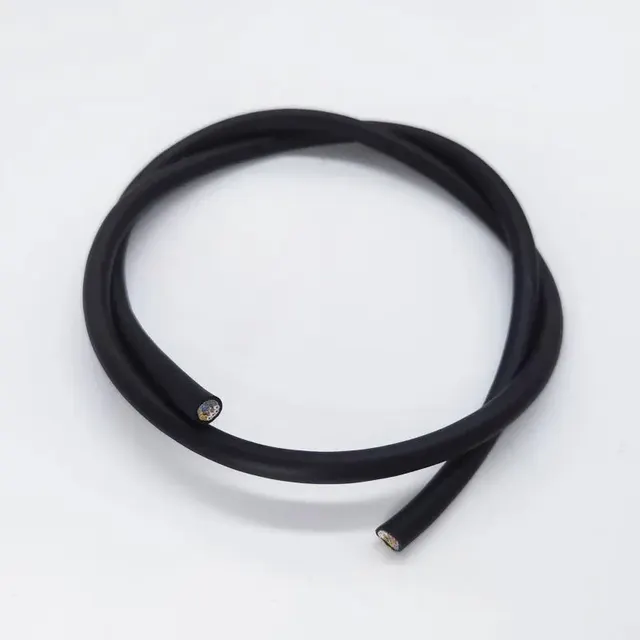
PDK71602-19×0.75 High-Flex Drag Chain Cable PUR 14.7mm
Drag Chain Cables · Industrial Automation
PDK71602
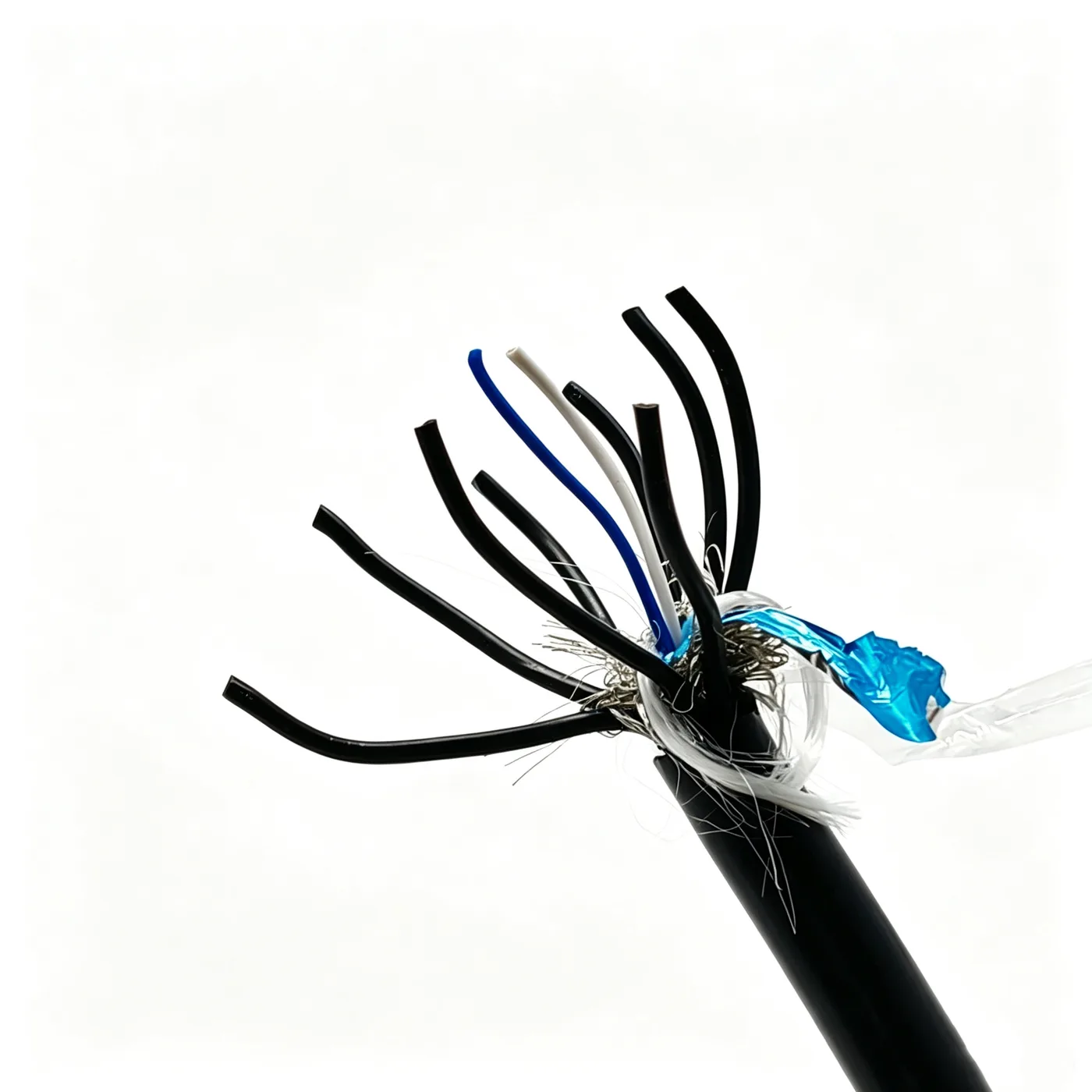
Nineteen-core 0.75mm² high-flex drag chain cable, 95-strand bare copper, automotive-grade insulation, 1.5mm PUR jacket, 14.7mm OD, 7D bending radius.
Product overview
PDK71602-19×0.75 is a drag chain cable developed for wiring that moves continuously back and forth in industrial automation equipment, and belongs to the high-flexibility mobile cable series. This size is built from nineteen finely stranded cores of equal cross-section with a polyurethane outer jacket, and is intended for control signal and power transmission in drag chains, linear guide tracks and robot arm joints. Unlike standard cable for fixed installation, it uses finer strand diameters and a more suitable stranding construction so that the layers can slide against each other during repeated bending, which delays conductor fatigue failure and extends service life in the chain. The cable is produced to GB/T5023-2008 and is suitable for continuous moving installation in general industrial environments.
Construction and materials
The conductor is bare copper: each core is concentrically stranded from 95 copper wires of 0.1mm diameter, with a stranded diameter of about 1.12mm and a nominal cross-section of 0.75mm². This fine-wire bunched construction distributes bending stress more evenly through the conductor, and is the basis of the high flexibility of a drag chain cable.
The insulation is extruded over the conductor with an average thickness of 0.34mm and a minimum of 0.29mm, giving a core insulation diameter of 1.8±0.2mm; the compound is an automotive-grade insulation material suited to moving duty, combining flexibility with abrasion resistance. Cores are identified by colour: four each of blue, black, red and green, and three yellow, which allows orderly termination and fault finding on site.
Fillers are added between the cores during cabling so the core assembly stays round and evenly loaded and the cores cannot shift during bending. The outer jacket is black polyurethane (PUR), average thickness 1.5mm, minimum 1.3mm, finished outer diameter 14.7±0.3mm. PUR offers good abrasion, oil and tear resistance and does not crack or swell in the oily environment of a machining shop, which is one reason the series is widely used on machine tools and automated lines.
Key characteristics
For movement, the minimum bending radius is 7D, i.e. seven times the cable outer diameter, about 103mm for this size. Sufficient slack should be left at installation, and the actual bending radius must not fall below this value, otherwise jacket wear and conductor damage accelerate.
The temperature range is -30℃ to +105℃, covering most indoor industrial environments; the jacket retains some flexibility at low temperature and does not soften or deform readily at high temperature.
Rated voltage is 300/500V, sufficient for conventional control circuits and small to medium power circuits.
Oil and abrasion resistance come from the polyurethane jacket, which suits cutting fluid and lubricant splash and mechanical rubbing. The jacket also has some UV and hydrolysis resistance for long-term use in damp workshops.
Electrical performance
Maximum conductor DC resistance at 20℃ is 25Ω/km; the low conductor resistance helps limit voltage drop and heating over long runs. The finished cable is printed as specified with the brand name, size, date of manufacture and metre marking, allowing length and batch traceability. Voltage drop can be calculated from the actual circuit length and load current, and a larger cross-section should be selected where necessary.
Other sizes in the series
Besides the nineteen-core construction, the PDK71602 series offers a range of core counts and cross-sections for control systems with different point counts and current levels. Unless noted otherwise below, the rated voltage, rated temperature and minimum bending radius of each size match the nineteen-core version described above.
- PDK71602-4×0.75 and PDK71602-5×0.75: finished outer diameter 7.5±0.3mm for both.
- PDK71602-5×1.0 and PDK71602-7×1.5: finished outer diameter confirmed per order.
- PDK71602-19×0.75 (this size): finished outer diameter as given in the construction and materials section.
- PDK71602-1×2×22AWG ATDS: tinned copper conductor, PE insulation, shield made of aluminium foil, drain wire and tinned copper braid, purple polyurethane jacket; finished outer diameter 4.6±0.2mm, rated voltage 300V, maximum conductor DC resistance 54.4Ω/km (measured at the same temperature as above), minimum bending radius 6D, for sensors and signal circuits sensitive to electromagnetic interference.
- PDK71602 TS 1×2×0.25+0.25+2×0.75: a composite of cores in two cross-sections, finished outer diameter 8.0±0.4mm, rated temperature range -35℃ to +105℃, for lower-temperature environments.
Typical applications
- Drag chain wiring on CNC machine tools and machining centres, connecting drives, encoders and limit switches.
- Repeatedly flexing wiring in industrial robot bodies and joints.
- Moving carts and slides on automated assembly lines and conveyor equipment.
- Woodworking and packaging machinery shops with oil mist and dust.
- Multi-core circuits carrying power and control signals together.
- Special-purpose equipment with frequent starts and stops and long reciprocating travel.
Selection and customisation notes
Establish three factors first: core count and conductor cross-section; ambient temperature range and contact media; and the type of movement (drag chain reciprocation, torsion or winding). Where strong electromagnetic interference is present, choose a version with combined foil and braid shield; where ambient temperature stays below the lower limit above, choose a low-temperature size such as PDK71602 TS; where installation space is restricted, check the minimum bending radius against the permitted outer diameter.
Special core counts, cross-section combinations, jacket colours and print marking can be supplied to order, with parameters subject to the specification sheet confirmed by both parties. During installation, avoid cables tangling in the chain, use separators to route power and signal cables in separate compartments, and keep enough free movement in the chain so the cable carries no extra tension. Periodic checks of cable arrangement and wear in the chain help find problems early and extend machine uptime.
Related in Drag Chain Cables
 Custom
 On request
 PDK91300
Engineering enquiry