Inclinometer Cable 4×0.34 mm² Tinned Copper, TPU, 7.5 mm
Specialty & Instrumentation Cables · Industrial Automation
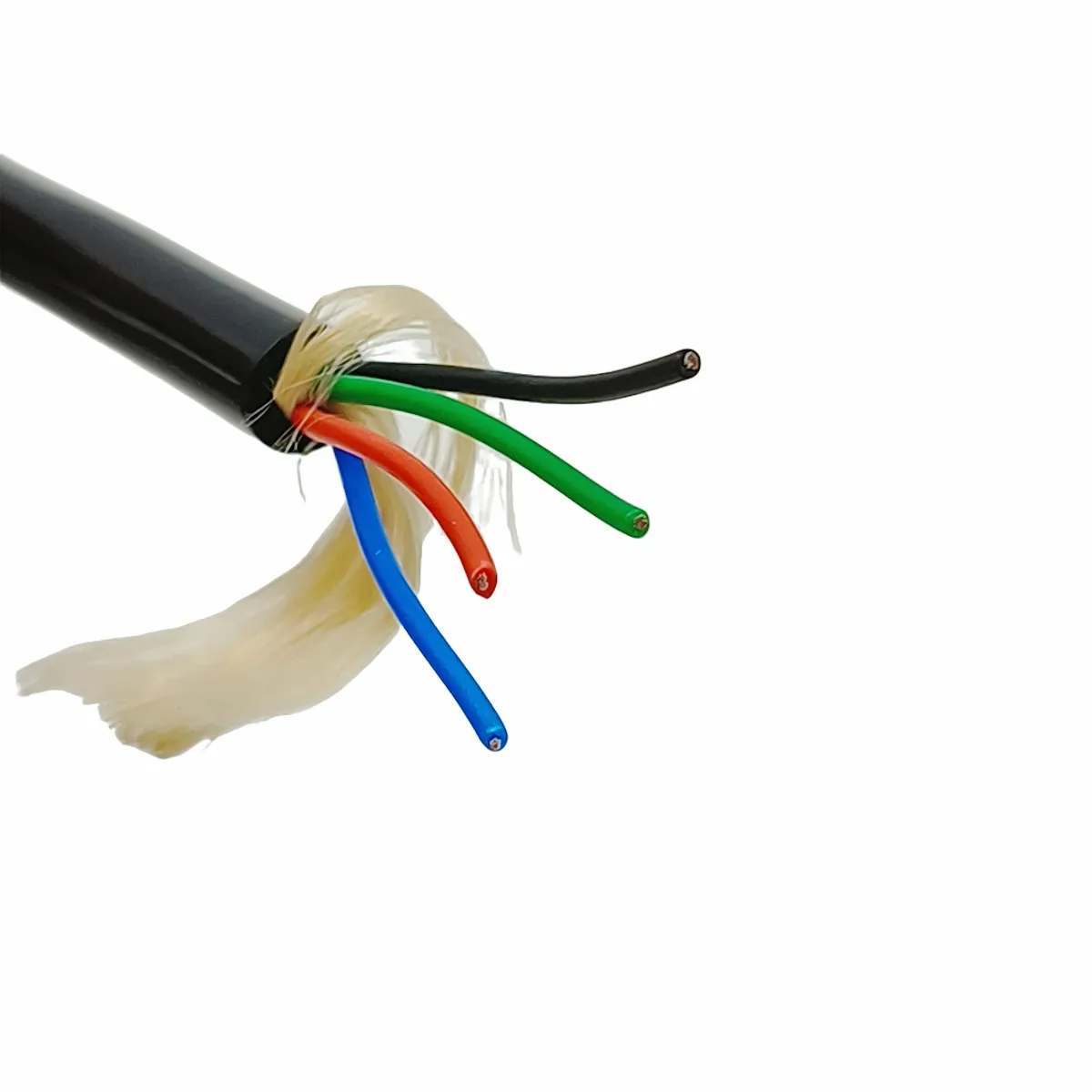
Inclinometer cable 4×0.34 mm²
Four-core inclinometer cable, 4 × 0.34 mm² tinned copper, PP insulation, central aramid strength element and black TPU sheath, 7.5 ± 0.2 mm.
Product overview
Inclinometer cable connects the probe of an inclinometer to surface data acquisition equipment and is a common accessory cable in borehole inclination surveys, geological exploration and hydraulic and geotechnical monitoring. Service conditions are often wet, and the cable is repeatedly lowered and reeled in with the probe, so flexibility, tensile capacity and the sheath's water and abrasion resistance all matter.
The specification described here is a four-core small-section construction: tinned copper conductors, polypropylene insulation, aramid fibre strength elements at the centre of the core and a black thermoplastic polyurethane sheath. Separating conduction from load bearing is the key to combining flexibility with reliability in this type of cable.
Construction and materials
Conductor: tinned copper strands. The overall cable specification is 4×0.34 mm², made up of four cores; the conductor diameter after stranding is about 0.75 mm and the lay is left-hand. The tinned layer suppresses surface oxidation of the copper and aids soldering.
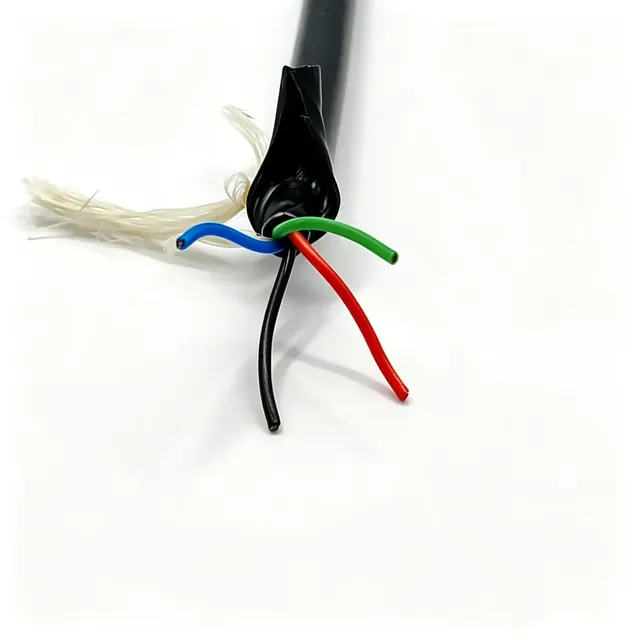
Insulation: PP, 0.37 mm thick. The insulation is extruded concentrically over the conductor to an insulated core diameter of 1.5 ± 0.03 mm, and the four cores are coloured black, green, red and blue for quick identification when connecting.
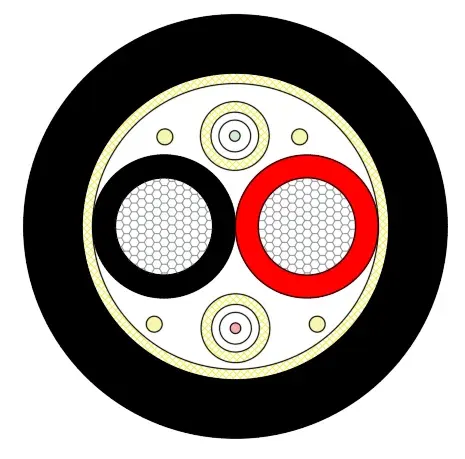
Cabling: four insulated cores stranded in a left-hand direction to a core diameter of about 3.7 mm. Six 3000D aramid fibres are placed at the centre of the core as strength elements, with fillers to keep the core round and the cores in position.
Outer sheath: TPU, 2.0 mm thick, black. The sheath is extruded over the core to a finished diameter of 7.5 ± 0.2 mm with a smooth surface, which aids lowering and reeling.
Key features
- Clear colour identification: the four cores are insulated in different colours so that circuits can be matched directly during connection and maintenance, reducing wiring errors in downhole work.
- Load bearing separated from conduction: the strength elements are concentrated at the centre of the core and tension is carried mainly by the aramid fibres, so the cores are not directly loaded in tension, which improves service life under repeated handling.
- Sheath suited to damp conditions: the thermoplastic polyurethane sheath offers good abrasion, oil and hydrolysis resistance with low-temperature flexibility, and suits field and near-water installation.
- Low water absorption insulation: polypropylene insulation keeps insulation resistance relatively stable in damp conditions or brief immersion, which suits small measurement signals.
- Compact construction: the core diameter and sheath thickness of this four-core small-section design are matched, giving a small overall diameter and low weight for lowering through boreholes and over sheave blocks.
- Defined tolerances: tolerances are given for both insulated core diameter and finished diameter, which helps in designing joints, seals and take-up equipment.
Electrical and mechanical performance
Electrically, transmission capability depends on the combination of conductor cross-section, insulation material and insulation thickness. Tinned copper conducts well and solders easily; polypropylene has low dielectric loss and high volume resistivity, which suits stable transmission of measurement signals; the four cores are individually insulated so that signal and supply circuits can be kept separate and interference reduced. Where a project needs shielding, twisted pairs or controlled impedance, these can be added to the construction.
Mechanically, tensile load is carried by the aramid fibres at the centre of the core while the sheath provides abrasion resistance and mechanical protection outside them. The cores are stranded, so individual wires deform through small angles in bending and stress concentration is unlikely, which means the cable resists core breakage when reeled repeatedly at a small radius.
Rated voltage, operating temperature range, minimum bending radius and tensile strength depend on the construction chosen and can be set to project requirements, subject to the specification document confirmed by both parties.
Typical applications
- Borehole inclination and tilt measurement: connecting the inclinometer probe to the data logger for transmission of dip angle, azimuth and similar measurement signals.
- Geotechnical and hydraulic monitoring: sensor leads or power cables in deformation and settlement monitoring systems for dams, slopes, excavations and tunnels.
- Geological and hydrological survey: short downhole measurement wiring in drilling, observation wells and hydrological logging.
- Instrument harnesses: supplied with inclinometers, logging instruments and data acquisition equipment, with length and termination set to the interface requirements.
The above are typical uses; actual installation method, working length and mating interfaces are subject to project requirements.
Selection and customisation notes
- Cores and cross-section: on the basis of this four-core small-section construction, core count can be increased or cross-sections adjusted to suit different combinations of signal, power and spare cores.
- Strength configuration: the number and size of aramid fibres can be adjusted to the tensile capacity required, and other reinforcement forms can be used to project requirements.
- Insulation and sheath: insulation material can be changed to suit electrical requirements; sheath material, colour and surface finish (such as matt) can be selected for the service environment.
- Additional features: shielding, armour, water-blocking fillers or oil and temperature upgrades can be incorporated during cabling and sheathing.
- Length and termination: finished length, print marking and termination at both ends are arranged after mutual confirmation.
For selection support, please discuss the service environment, installation method and interface requirements with the PAIDE Cables technical team; production follows the specification document confirmed by both parties. The product is manufactured by PAIDE Cables and can be customised per project.
Related in Specialty & Instrumentation Cables
Engineering enquiry